There is probably hardly a visitor who comes to Armenia, even for just a few days, without visiting Lake Sevan.
Many come to admire the beauty of the lake, visit Sevanavank or Hayravank Monasteries, perhaps explore the Noratus khachkar field, take a boat ride and listen to the countless fascinating stories surrounding this extraordinary place.
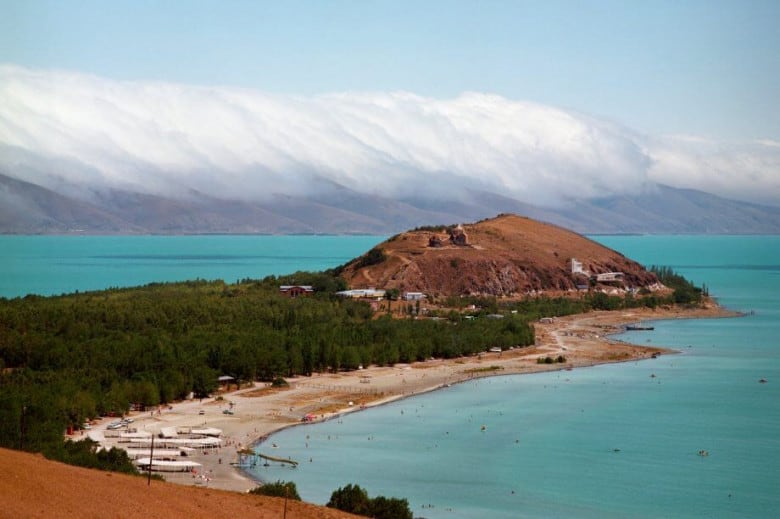
Some, especially locals, will inevitably mention that the lake once stood at a much higher level and that it was only after the water was lowered that the island on which Sevanavank stands became a peninsula.
I remember one particular image very clearly. Once, when we went towards the island and, by the way, locals still call the peninsula “the island” the water level was so much higher than it is today that, standing in one place, I could look to my right and see the shore, then look to my left and see the shore again.
Yet no matter how many times my grandfather explained that the lake had once been much higher, it was difficult for my five or six- year- old mind to understand what that actually meant.
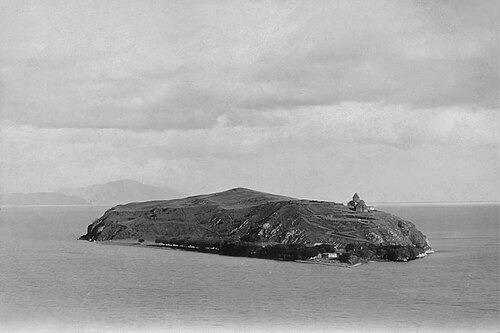
It was only much later, when I grew up, became a tour guide and began studying the subject more seriously, that I was finally able to visualize what he had been telling me.
Even today, whenever I talk to my grandfather, no matter what our conversation is about, at some point he inevitably turns back to Sevan. He starts telling me another story from his childhood, his youth, the lake, or the town.
I have heard some of these stories dozens of times. And yet, I still love listening to them.
My surprise was enormous when, one day, he told me the story of how Armenian brandy saved Lake Sevan.
When I became a tour guide, I began telling this story to my guests as well. Very often, they would ask me where I had learned it. The problem was that I could not find a single source confirming the story my grandfather had told me. Everything I found spoke about the construction of the Arpa–Sevan tunnel, the enormous financial cost of the project and its engineering challenges.
But nothing about brandy.
Ah, forgive me.
I have not told you the story yet.
Let me start from the beginning.
The Plan That Nearly Destroyed Sevan
It was the 1910s when an engineer named Sukias Manaseryan proposed a gigantic project to use the waters of Lake Sevan for irrigation of the Ararat Valley.
The plan was rejected by Tsar Nicholas II of Russia.
But when the Bolsheviks came to power, the project was approved in 1923 and construction began.
Lake Sevan consists of two parts: Greater Sevan and Lesser Sevan. Interestingly, Lesser Sevan contains more water than Greater Sevan because the deepest point of the lake is located there.
Under the original plan, Greater Sevan was to be drained almost entirely.
Yes, you read that correctly: almost entirely.
At the time, the lake stood at around 1,918 metres above sea level. According to the project’s proponents, its high water level contributed to greater precipitation: more rain and more snow.
The plan also called for a series of hydroelectric power stations to be constructed along the Hrazdan River.
And apparently, that was not enough.
The drained land was supposed to be turned into agricultural fields where corn and potatoes could be grown.
The project went ahead.
But only a few years later, it became clear that instead of bringing the promised benefits, it was seriously damaging Lake Sevan.
First, Sevan’s water was not actually suitable for irrigation in the way the project had envisioned. Second, the land exposed by the falling water level was far too rocky for the agricultural paradise that had been imagined. And the rainfall did not decrease either. What remained was a lake on the verge of ecological catastrophe.
Save Sevan …
When it seemed that all hope was lost, people finally began asking the question: How can we save Sevan?
In 1961, Nikita Khrushchev, First Secretary of the Communist Party of the Soviet Union and Chairman of the Council of Ministers, arrived in Armenia. His visit was connected with the 40th anniversary of the establishment of Soviet rule in Armenia and the founding of the Armenian Communist Party. Soviet leaders did not often visit the union republics, so their arrival was treated as a major event. There were concerts, performances, film screenings and countless official gatherings. Newspapers increased their number of pages, while magazines published special editions dedicated to the visit.
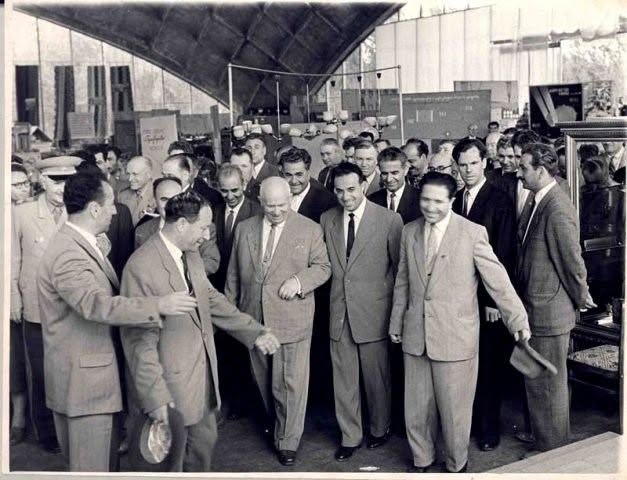
Khrushchev stayed in Armenia for five days visiting factories and enterprises, meeting people and taking part in various events. On May 9, together with Yakov Zarobyan, First Secretary of the Armenian Communist Party and Anton Kochinyan, Chairman of the Council of Ministers of Soviet Armenia, Khrushchev travelled to Sevan.
He visited the Sevan–Hrazdan Cascade hydroelectric complex and took a boat trip on the lake aboard the Mikoyan.
And there, among the people accompanying him, was one of the most controversial Armenian figures of the 20th century: Anastas Mikoyan. A man who had never particularly distinguished himself for Armenian nationalism and who was instead known for his strong loyalty to the Soviet system, would nevertheless play an unexpected role in the fate of Lake Sevan. After the boat ride, Mikoyan, Kochinyan and Zarobyan served Khrushchev Sevan’s famous trout. The fish itself was in danger of disappearing because of the ecological crisis affecting the lake. The Armenian officials proposed investing substantial funds to preserve the species. Khrushchev reportedly responded that this would be a pointless waste of money.
But Mikoyan knew something about Armenian products.
Having previously served as Soviet People’s Commissar for the food industry and being a major supporter of Armenian brands, he knew very well the value of Armenian brandy. According to the story passed down through memories and later retold many times, it was in this informal, warm and distinctly “brandy-fuelled” atmosphere that Mikoyan managed to soften Khrushchev’s initial position.
And somehow, the conversation helped pave the way for the historic decision to build the Arpa–Sevan tunnel.
The Tunnel That Saved Sevan
The Arpa–Sevan tunnel was eventually constructed to bring water from the Arpa River into Lake Sevan.
Stretching for approximately 48 kilometres, with sections reaching around 48 metres in depth beneath the mountains, the tunnel carries water from the Kechut Reservoir through the mountains and into Lake Sevan. It was thanks to this project that Lake Sevan’s invaluable water resources could be preserved. After all, Sevan is not simply a beautiful landmark, it is one of Armenia’s most precious reserves of freshwater, making its protection vital for the country’s future.
And this one left us with a priceless Armenian saying:
If you don’t know how to solve a problem, let Armenian brandy help you.
Cheers.
To legendary Armenian brandy.
And, above all, to the survival of Lake Sevan.
P.S By the way, Sukias Manaseryan did not leave his mark only on Lake Sevan. He later went to Kazakhstan, where he was involved in a project concerning the Aral Sea.
Well… you probably know what happened to the Aral Sea.